Showing posts with label picks. Show all posts

Friday, January 8, 2010

Video: Tips for Beginners- more on strumming motions

Here is a second video on basic strumming which goes over some of the motions you want for smooth strumming and some of the things to avoid:

continue reading the rest of this post here...

Tuesday, January 5, 2010

Video: Tips for beginners- STRUMMING

Here's a very quick video I recorded so beginners could practice a basic starting strum rhythm and strumming directions. I hope it's helpful to some folks.


continue reading the rest of this post here...

Thursday, December 31, 2009

Fun With Feathers- Part 2 !


Oh Boy, more fun with feathers!

First, do read my FIRST post about using feathers as picks and noters-- CLICK HERE FOR Fun With Feathers part 1.

Recently on my online community website, Friends of the Mountain Dulcimer, Ken Rice of Bucks County, Pennsylvania posted some excellent photos and instructions for making traditional feather picks and noters from goose quills. I felt his information would be very useful to folks wanting to experiment on their own with making feather picks and noters, and Ken graciously gave his permission to post his photos and insructions here on my blog...
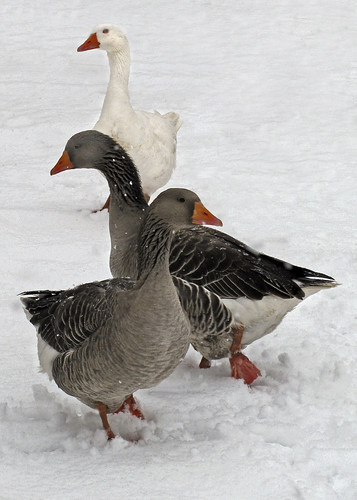
Ken gets his feathers from his three lovely geese- Maudie, Olive, and Fig:

Here are Ken's instructions and photos for making NOTERS out of goose quills. Ken writes:

I have been using a noter made from an adult goose flight feather. I like it, but I am new to dulcimer playing so don't have much of a basis for comparison.
It's about 15 cm (6 in) long, and it weighs about 1/2 gram. The feather shaft has a gentle bow, and you hold the convex face of the bow against your palm, using the large end of the shaft to fret the string.
I have better luck when I use a hot knife to cut these. The shafts tend to splinter and split otherwise. Alternatively, you could saw them very gently with a jeweler's saw and burn the end back on a hot surface.
When pulling the barbs off the shaft, try not to pick up a long curly "shaving" from the shaft itself. This weakens the shaft.
I touch it up gently with fine sandpaper, and it's done.
It's holding up well, though I've only been using it a month.


And here is how Ken makes his PICKS from goose quills...picks such as these are particularly suited to the traditional Galax, Virginia dulcimer playing style:
Picks made from flight feathers from our geese Maudie, Fig and Olive. These range from 8 1/2 to 10 inches.
Peel the barbs off gently and gradually or debarb them with a single-edge razor blade, singe them over a flame, cut to length with dog nail clippers and then sand off any remain barbs on the large end so they feel smooth when you hold them.

Thank you Ken Rice for these great quill crafting tips and photos!

continue reading the rest of this post here...

Tuesday, March 31, 2009

Fun with Feathers

People often ask about the old tradition of using feather quills in playing mountain dulcimers, so I thought I'd do a post about it. I also thought it would be helpful to consolidate into one place some of the useful quill pick information that is currently scattered about in various places online.

Feather quills can be used in several ways, and it's a wonderful old tradition to try out.
You need large heavy feathers, such as flight feathers or tail feathers from a turkey or a goose or eagle.
There are two very different ways of using a feather quill for a pick...

One way is using the long thin flexible end in a 'scrambling eggs' motion, parallel to the strings.
See Kimberly Burnett-Dean demonstrate it here in playing: "Galax style"
Here also is Don Graves demonstrating this same method, and showing how to prepare a quill for this kind of playing: Don Graves preparing a quill. This whisking strumming technique is often associated with the playing style from Galax, Virginia.

The other method is to use the thicker end of the quill and cut the tip at an angle like a quill pen (the thinner you whittle it the more flexible it becomes), and hold it more upright- no scrambling/whipping eggs motion at all, but striking the strings straight across vertically in a very strong way with the stiff part of the quill.
Here: Jean Ritchie demonstrates the technique in playing the ballad Shady Grove, recorded about 50 years ago on the Pete Seeger tv show.

Incidentally, some 50 years later, Jean would play Shady Grove with a very similar strum stroke, but this time using a flexible piece of plastic instead of a feather- in this particular case a plastic hotel key card. Jean has said that she now sometimes uses a large triangular pick cut from the lid of a Cool-Whip container instead of a quill because it it easier to hold due to arthritis. Adventurous experimentation in using various materials at hand to make picks from is a very traditional practice!
Jean recently wrote:

"On the frontier (of my Youth) we didn't have plastic containers yet,nor any other materials mentioned here, so that's why my Dad used goose or turkey wingfeathers, whittled down as explained in my old, THE DULCIMER BOOK (published in 1952 and still going strong). They still work, but I'm often explaining to audiences as to why I'm using a coffee-can-lid pick, "Well, they don't make turkey-wings like they used to."

For myself, I tend to use a strum motion that is similar to Jean Ritchie's strum technique but with a touch of Galax side-whipping motion thrown in, and I use a medium-long narrow very flexible plastic pick, not a stiff pick.
In this article, Jim Baldwin gives some more helpful information about using feather quills in traditional Appalachian dulcimer playing.

An additional use for heavy feather quills is to cut off the heavy end and use it not for strumming or picking, but as a noter. I hear it slides up and down the strings quite nicely.
Turkey and goose quills can also be utilized in making old fashioned quill pens, arrow shafts, and even fashion apparel!

...Don't miss reading the post
"Fun With Feathers- Part 2!"

continue reading the rest of this post here...

Saturday, March 7, 2009

Take your pick

Picks are a funny thing. One day you find what you think is the perfect pick, and then a few months later it just doesn't seem to be so great after all, and you suddenly find a different perfect pick. This simply means that the way we play is changing and evolving over time. This is a good thing, even though it means we may have to repeat our hunt for the right pick over and over. Funny how we seem to grow out of this ongoing search for perfection when it comes to searching for a mate...but not for a pick...


As I mentioned previously, when I started out playing the mountain dulcimer years ago I didn't really have any teachers and I wound up getting instruction books that taught flat-picking chord style playing, mostly in DAD mixolydian tuning. I first bought large thin flexible triangular picks made by Fender and Jean Schilling. I was strumming across all my strings and picking out melodies on the various strings as well. I kept breaking corners off these picks in my strumming enthusiasm, so I ordered a whole slew of them! Then I joined a dulcimer club where most of the tunes were played in that style as well. I quickly picked up on the fact that a lot of these people preferred much harder and smaller triangular Herdim picks with pointy corners. This seemed to be the way to go, and they were unbreakable, so I began to use them instead of my large thin triangles.
I found the small hard guitar-like Herdim pick to be practical for what we were doing- flatpicking melodies and chords on the various strings, often picking one string at a time and alternating quickly between strings. I remember it occurred to me at the time that we were all using flat picking patterns much like folk guitar players do, and indeed we were using similar picks as well. Bluegrass mandolin players also use such picks for picking out melodies over the various alternating strings. It just works well for this kind of playing. I played for about two years this way, and I became pretty good if I do say so myself.

That's when I discovered the banjo and my life changed.

My dulcimer hung on the wall unloved while I fell under the spell of the banjo's ancient untamed drones. I was tired of all the elaborate picking and chording I had been doing on the dulcimer. It had become ever more difficult to play without reading a complex tab 'code map' on a stand in front of me. It all suddenly seemed to me to be a fruitless march towards ever more tediously elaborate ornamentation. I wanted out.

I wanted to sweep the table clean of all the prettiness and instead connect with some mysterious raw inner resonance inside me. I imagined what it would be like to retreat to some mountaintop and blow on a grass reed, contemplating its single pure note for a few months. I abandoned my beautiful maple dulcimer and happily immersed myself in drones on my banjo for about seven years. I learned to play banjo with fiddlers who cross-tuned and played the drones I craved, I learned to sing old unaccompanied ballads and it was all wonderful and intoxicating. I became drunk on drones and archaic intervals.

As you may already know, eventually it occurred to me (duh) that I could play the dulcimer in a different way than I used to...in an older drone-based way that did not require flat picking melodies and fingering full chord changes across all the strings.
It was very hard for me to make this switch, but I was determined. I felt like a baby just learning to walk. I couldn't get the strumming rhythm right. I couldn't get the noter to work right or sound right. I was awful, and my misery lasted through weeks of trying. I truly hated sounding so awful and clumsy, but I kept at it. The key to my success was that I kept it simple. I played baby tunes like Go Tell Aunt Rhody and Hot Cross Buns. I didn't try to rush ahead of myself.
There came a day when I realized I was starting to enjoy sliding the noter up and down, my notes were beginning to ring clearer, and my rhythm had begun to improve. I asked my fiddler husband to play a simple fiddle tune (one that I could play well on banjo) and to play it v-e-r-y s-l-o-w-l-y so I could try to play along with him. It was really hard for him to play THAT slowly, but he did and was extremely patient with my musical fumblings. We played more, and I got better little by little. As the weeks went by, I became faster. Still not able to keep up with most old-time sessions, mind you, but faster than I was before. I discovered recordings of Galax style dulcimer playing, and this inspired me greatly! I too wanted to sound like 'a swarm of bees'...how incredibly exciting! They played so fast that their drones never stopped ringing! I too could fill the universe with my eternal/infernal drones!

The funny thing was that as I became faster, I found that my familiar little hard triangle guitar-ish pick was proving to be problematic for fast noter/drone strumming. It created a lot of resistance and held my speed back. Whenever it hit the strings it wanted to go flying across the room and resulted in my having to keep a tight grip on it. This would obviously cause hand cramping problems. But the problem with the hard little pick is that I didn't like the sound it was producing. It sounded too harsh, too loud, and too guitar-like... not delicately graceful like Jean Ritchie and her goose feather quill, and not bee-ish like the Galax players with their long flexible quill 'dominatrix eggwhippers'. Clearly I had to ditch the little guitar pick and go longer and more flexible.

Being a fan of things old-fashioned and traditional, I attempted to use a turkey feather. I had a bunch of them to experiment on. I tried preparing them in various ways I had read about, and I tried using each end in the prescribed way. What I found was that for me, they were not up to any sustained usage, and they tended to shred rapidly. This was frustrating. I had read about the resourcefulness of early dulcimer players, and about how they often experimented with various "plectrum" (pick) materials...bundled electrical wires, collar stays, leather, felt, wood, bone...they tried whatever they found at hand around them. I tried some of these materials as well (hmmm...not easy to find collar stays these days) and I came to the conclusion that maybe plastic would be most like feather quill material, yet perhaps more flexible and more durable than quills. I had read where others had used cut up credit cards as picks, for example. Not a very picturesque solution, but certainly practical! And thrifty, in more ways than one.

I began to experiment with cutting my own picks from plastic items. Credit cards were first. I found them way too hard. My old stash of thin flexible triangle picks was dug up and tried, but again they kept breaking. I tried heavy felt and leather, but the sound was too muffled for my liking. I tried bundling various wires together, but it sounded to fuzzy. I finally got hold of a collar stay, but it was too flexible and limp, as were some plastic tops from supermarket deli containers.

I was beginning to feel like Goldilocks.
I tried cutting up plastic milk jugs, that was getting closer, as were yogurt containers.
In the end, I found that using a small range of different plastic materials was just fine. I could use a slightly heavier one in a big jam situation and be heard a bit better, and I could use a thinner one when in a singing jam so that my strumming wouldn't drown out anyone's voice (including my own). Effects could also be varied according to how long/narrow/wide/pointy/rounded I cut them. Hey, this was fun!
Again I had to try to fight my tendency to become too fixated on the idea of finding the elusive Holy Grail perfect pick. The important thing for me was that I realized that longer more flexible picks were what I needed to get the sound I wanted for myself. You will seek the sound that pleases you.
Don't be afraid to have fun and experiment with making your own picks from interesting materials. You just might like the resulting sound better than the sound you have been getting from the pick you've been used to for a long time. Or not. But it's fun to cut up credit cards anyway.
continue reading the rest of this post here...

Friday, March 6, 2009

Picky, picky, picky

Every time I have started playing any new kind of instrument, I seem to go through the same evolution. During my first learning stages, every detail concerning the 'trappings' of playing had to be just a certain way if I was to play...

I recall feeling I had to have exactly a certain height of foot rest in order to play the mandolin... Any tiny variation in height was disastrous! Exactly a certain hardness of pick. With the banjo, I had to have perfect finger picks precisely molded to my fingertips in hot water, or else carefully applied fake fingernails filed just a certain way.
In my early dulcimer days, again I had to have exactly a certain type pick, a certain kind of strap, my music stand set at a particular angle, only certain strings, the right kind of chair...or else I just couldn't play well at all!

With all these instruments, after I had been playing any of them for a couple of years or more, these excessive details simply began to not matter to me so much. I became less obsessed with detail and more adaptable. I made do, and tried to not pander to my obsessive compulsions. I like to think that my fussiness was getting on my own nerves. Laziness played its part as well- I might be sitting at my desk in my office at home and suddenly want to check on a note in some tune, so I'd grab my dulcimer from the wall here and pick out the tune without bothering to go get a pick or a noter and even without bothering to get out of my office chair with its aggressively anti-musician arms. {{{shudder}}}

In my previous post about noters, I told the story of losing my 'special' green noter and how I enlisted the help of others to desperately search for it in the grass for what seemed an eternity. (note to self: Don't use your green noter when playing outdoors in the grass)
It's a good example of how something as simple as a little stick can take on way too much importance if you let it.

Having become aware of this tendency in myself to obsess about the superficial trappings associated with playing an instrument, I now make a game of it. When I suspect that I am becoming too dependent upon some accessory or brand of something, I now purposely remove it or use something else for a while.

I have come to see this restrictively dependent behavior as a barrier between myself and my music. All it does is create a slew of imaginary reasons why I might think I don't sound good or play well. I am not a professional musician, nor is it my goal to become one. So in the end, it's not how well I play or how 'good' I sound that is most important to me- rather it's the joy and pleasure that playing music brings to me and to others who might enjoy playing with me or listening. The one most important truth I have come to feel about music is that joy overrules perfection.


And speaking of being picky...I want to discuss picks in my next post!

continue reading the rest of this post here...

Saturday, February 14, 2009

Starting simple


The real beauty of noter & drone style playing is its simplicity. If you can hum Mary Had a Little Lamb, then you can play it on your melody string with no need for a tab arrangement to guide you.
Chords have made things complicated enough for people to feel they need tab to get all the fingerings. There ARE no 'fingerings' in noter, fingerdancing, or Galax style playing... You play the simple melody line on the melody string, and the open drone strings will provide additional interval notes that will sound full, and you won't need to refer to 'fingering positions'. Many folks grow to love the sound of the mode intervals changing against the open unchanging drones.

Start SIMPLY, with a very simple melody you know. You will get better steadily if you just play easy stuff and have fun with trying to pick out melodies. Save the tricky tunes til later. Every time you get frustrated just go back a step to something easier. Once you can play Go Tell Aunt Rhody or Mary Had a little lamb without having to concentrate too hard, then move on to Twinkle Little star or Three Blind Mice or Frere Jacques. To start, perhaps you could tune your dulcimer (from bass side to melody string side) D-A-AA. This is tuning in the Ionian mode. Your key note of D in your melody will start on your THIRD fret on your melody string that is tuned to A. Your third fret will be a D, and you'll be playing in the key of D. Start playing Twinkle Twinkle Little Star on your melody string(s) starting and ending on your third fret. You will be playing in Ionian mode.

Good rhythm comes with practice and time. Rhythm is just as important as notes. Don't even worry or think about speed- speed just comes automatically as the months go by. Speed should not be a goal.
Try a longer more flexible pick. Try cutting a pick out of a stiff plastic take-out container from a Deli- make it 1 1/2" long and about a 1/2" wide, tapering to a rounded end. As you get faster, you might not want stiff short Herdim picks for playing fast tunes. Don't do any flatpicking on various strings. Basically you are strumming across all strings every time. Personally, I never flatpick at all- and flatpicking is a technique that is already amply covered in the teachings of more modern dulcimer playing styles. Some people do, however, angle their pick sometimes so they they purposely avoid hitting the drones on certain parts of the tune. Or, they angle it to only hit a low drone on some particular beat. These are cool techniques you can experiment with later.

Your beginning rhythm strum will be something like DOWN, down-up, DOWN, down-up. Like a galloping horse sound. Go to my YouTube Channel, HERE, and watch my videos about beginning strumming and using a noter.
Work on the strums and then work in your notes like TWINK, kel-l, TWINK, kel-l, LIT, tel-l, STAR, down-up.... You may need to practice your strum rhythm by holding your left hand on the strings to mute them and just practice your strumming without driving everyone in the neighborhood insane. Nothing comes without practice, but just remember that the first few days are the very hardest, from then on it will slowly, slowly get EASIER. Don't be frustrated, just try to enjoy the simple zen quality of the resonant sounds you are making. Think of yourself as a loon calling out a single lonesome note that echoes over the lake. There is profound beauty in a single heartfelt note. Let it come from within you and enjoy its pure beauty.


continue reading the rest of this post here...